Spray coating
Discrete PVDF points leave additional electrolyte infiltration paths.
Pole plate
PVDF
Separator
PVDF COATING
A functional coated separator for electrode adhesion, electrolyte retention and high-voltage compatibility.
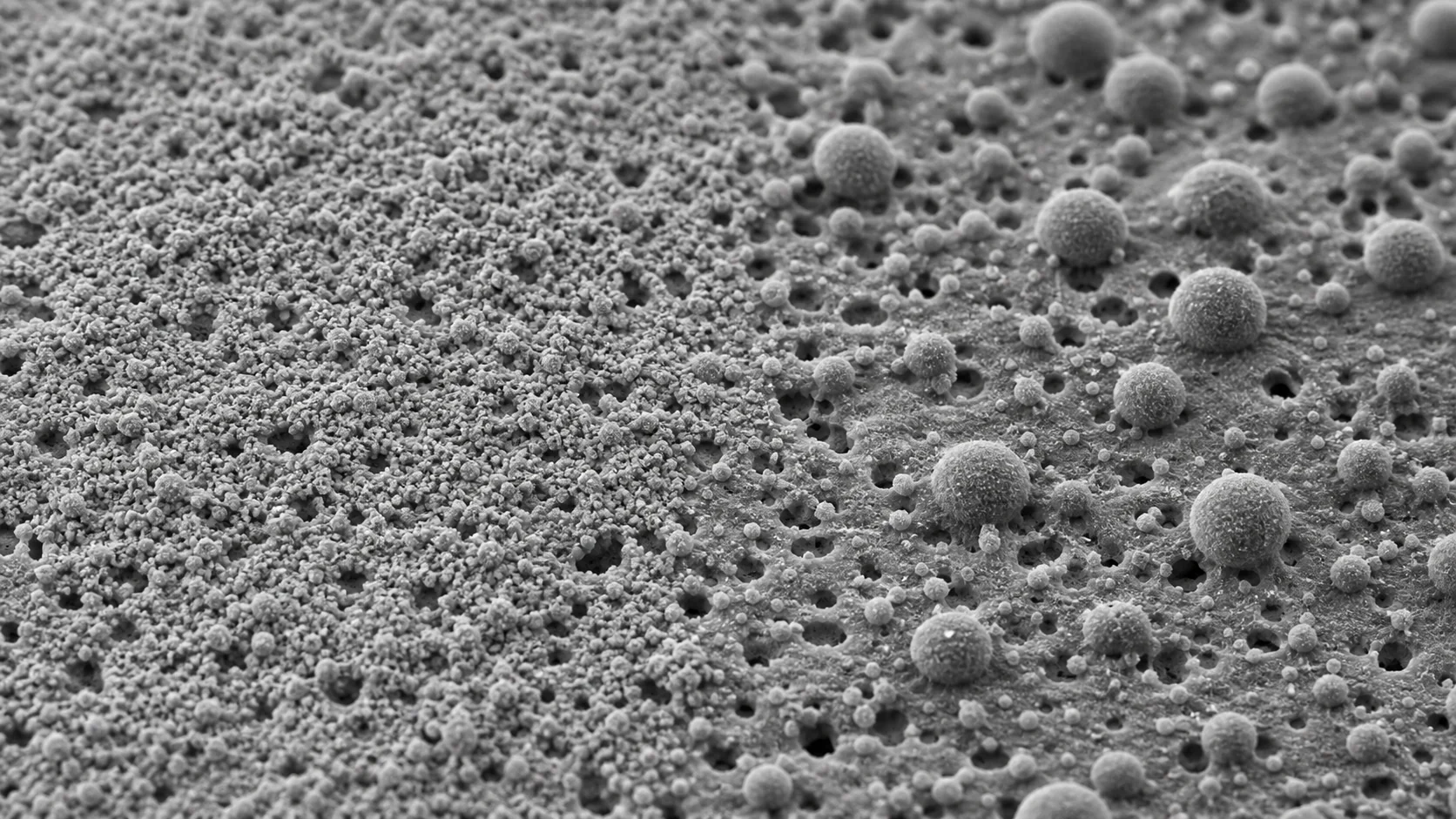
PVDF surface functionality supports stronger electrode interaction and electrolyte management in suitable cell designs.
SOURCE-DOCUMENTED PROFILE
The supplied literature distinguishes spray and roll coating by electrolyte access, electrode adhesion and separator air permeability, then reports three construction classes.
Technical content reproduced from the supplied water-based PVDF separator literature, pages 9–10.Good adhesion between separator and electrode
Better electrolyte infiltration and increased liquid retention
High decomposition voltage and applicability to high-voltage material systems
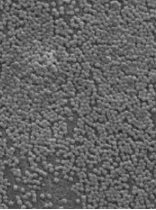
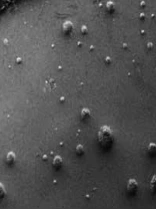
MICROSCOPY / SURFACE DETAIL
The source page presents these two microscopy examples without assigning a process label to each panel. They are therefore described only by visible morphology here.
METHOD COMPARISON
The source explains that gaps between sprayed PVDF points provide electrolyte infiltration channels, while roll-coated material permits infiltration through inter-particle gaps.
Discrete PVDF points leave additional electrolyte infiltration paths.
A more continuous PVDF layer emphasizes electrode adhesion.
PHYSICAL PROPERTIES
The source identifies these as water-based PVDF / ceramic coated-separator constructions. The matrix compares spray and roll coating air permeability while keeping mechanical and thermal properties tied to each printed construction code.
Compare all 3 published configurations
| Test item | Dir. | 9 μm basePVDF9+3+1+1 | 12 μm basePVDF12+4+1+1 | 16 μm basePVDF16+2+1+1 |
|---|---|---|---|---|
| Thickness deviationμm | — | ±1 | ±1 | ±1 |
| Air permeabilitySpray coating · sec/100 cc | — | 200±40 | 240±40 | 240±40 |
| Air permeabilityRoll coating · sec/100 cc | — | 250±40 | 290±40 | 290±40 |
| Tensile strengthMPa | TD | >100 | >110 | >120 |
| Tensile strengthMPa | MD | >100 | >110 | >140 |
| Puncture strengthgf | — | >435 | >600 | >600 |
| Heat shrinkage105°C · % | TD | ≤1 | ≤1 | ≤1 |
| Heat shrinkage105°C · % | MD | ≤1 | ≤1 | ≤1 |
| Heat shrinkage120°C · % | TD | ≤2 | ≤2 | ≤2 |
| Heat shrinkage120°C · % | MD | ≤2 | ≤2 | ≤2 |
The combined PVDF / ceramic description and spray / roll coating terminology follow the supplied product literature.
Construction codes are preserved verbatim; no undocumented layer-stack interpretation is added.
QUALIFICATION CONTEXT
Published matrices support initial comparison. Final specifications remain tied to the selected grade, agreed test method and lot-specific quality documentation.
Send the target thickness, width, coating requirements and volume for a project quotation, typically expressed in USD per square metre.
Request Product Quote